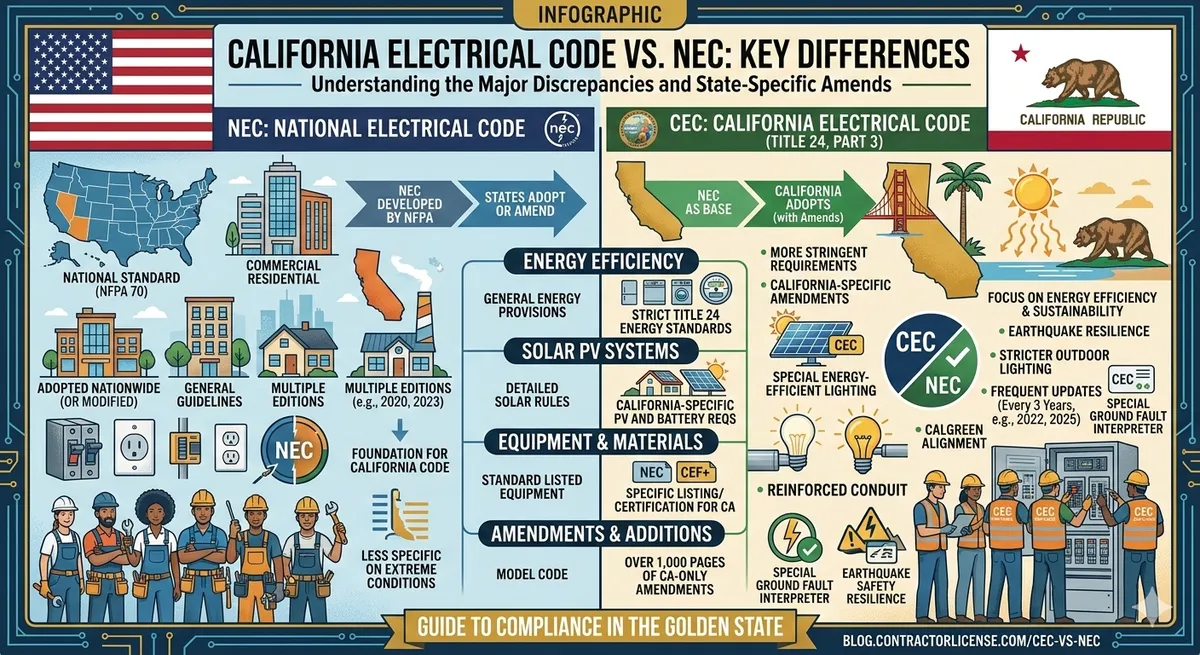
California has specific amendments to the NEC. We cover the key differences you'll see on the CSLB exam questions.
California does not simply adopt the NEC as-is. The state adopts it under Title 24 of the California Code of Regulations with specific amendments. For the C-10 exam, understanding these California-specific requirements can make the difference between passing and failing.
How California Adopts the NEC
The California Electrical Code (CEC) is Part 3 of Title 24 of the California Building Standards Code. It is based on the National Electrical Code (NFPA 70) but includes California amendments that address the state's unique requirements for:
- Seismic safety
- Energy efficiency (Title 24 Energy Code integration)
- Solar photovoltaic and energy storage systems
- Electric vehicle charging infrastructure
- Wildfire prevention in WUI (Wildland-Urban Interface) zones
Key California Amendments
Solar PV Requirements
California leads the nation in solar requirements. Since 2020, all new residential construction must include solar photovoltaic systems. Key C-10 exam topics include:
- Rapid shutdown requirements (NEC 690.12) — California enforces module-level shutdown
- Battery storage system installation (NEC 706)
- Interconnection standards with the utility grid
- Fire setback requirements on rooftop arrays
EV Charging Infrastructure
California's push toward electric vehicles means the C-10 exam increasingly tests EV charging installation knowledge:
- NEC Article 625 — Electric Vehicle Charging Systems
- California's EVSE (Electric Vehicle Supply Equipment) requirements for new construction
- Load management systems for multi-unit dwellings
- Panel capacity planning for future EV charging
Energy Code Integration (Title 24, Part 6)
The California Energy Code affects electrical installations in several key areas:
- Lighting power density requirements
- Lighting controls and dimming requirements
- HVAC system electrical requirements
- Energy monitoring and sub-metering
Exam Application
The C-10 exam references the 2022 California Electrical Code, which is based on the 2020 NEC. If you're studying from a standard NEC book, be aware that California may have additional or different requirements. The CSLB study guide lists all reference codes.
Cal/OSHA vs. Federal OSHA
California operates its own OSHA program (Cal/OSHA), which is generally more stringent than federal OSHA. For the C-10 exam, key Cal/OSHA differences include:
- California's Injury and Illness Prevention Program (IIPP) requirement — all employers must have a written IIPP
- Heat illness prevention standards for outdoor workers
- Higher penalties for violations compared to federal OSHA
- Cal/OSHA Electrical Safety Orders (Title 8)
Wildfire Zone Requirements
California's WUI (Wildland-Urban Interface) zones have special electrical requirements:
- Fire-resistant wiring methods in exterior applications
- Emergency power shutoff requirements
- Utility power shutoff (PSPS) backup power systems
- Generator and battery backup installation standards
Study Strategy
For the C-10 exam, you don't need to memorize every California amendment. Focus on the high-frequency topics: solar PV requirements, EV charging basics, and Cal/OSHA differences from federal OSHA. These are the areas where California-specific questions are most likely to appear.
Ready to Pass Your Exam?
Put your knowledge to the test. Try our free California C-10 practice test to see where you stand, or upgrade to our Premium Preparation Course for unlimited mock exams, detailed explanations, and a 100% pass guarantee.
Recommended Articles
CSLB C-10 License Requirements: The 2026 Checklist
Everything you need to know about CSLB experience requirements, application fees, and licensing for 2026.
CSLB Application Process: Step-by-Step Guide
Don't let your application get rejected. Follow this walkthrough to fill out your CSLB forms correctly the first time.
CSLB Bonds and Insurance: What You Need and What It Costs
A breakdown of the personal and business financial requirements for becoming a licensed C-10 contractor.